Prof. Amtul Carmichael, Consultant Oncoplastic Breast Surgeon
Prof. Amtul Carmichael
Consultant Oncoplastic Breast Surgeon
 Instant booking
Prof. Amtul Carmichael MD FRCS (Gen Surg) MBBS (Honours) M Ed
Consultant Oncoplastic Breast Surgeon
Prof. Amtul Carmichael
Consultant Oncoplastic Breast Surgeon MD FRCS (Gen Surg) MBBS (Honours) M Ed
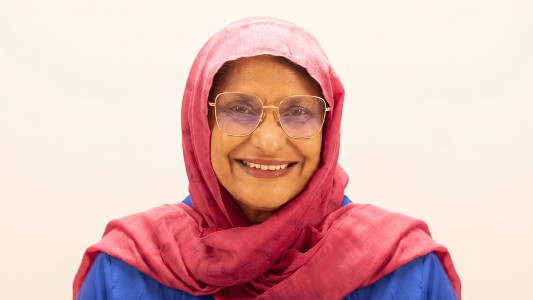
Prof. Carmichael is a recommended Consultant Oncoplastic Breast Surgeon
Meet Prof. Amtul Carmichael: Consultant Oncoplastic Breast Surgeon|20+ Years of Experience in Breast Cancer Care



Areas of expertise
- Breast cancer
- Breast lump assessment
- Inflammatory breast cancer
- Breast pain
- Family history of breast cancer
- Breast consultation


Recommendations for Prof. Carmichael
These recommendations are for information purposes only. Doctors providing recommendations do so in good faith and are not responsible for clinical outcomes.






Recommended by:


byProf. Kefah Mokbel, Consultant Breast Cancer Surgeon
❝A highly skilled and exceptional breast surgeon whom I strongly recommend.❞

by MG
❝Professor Carmichael is a lovely lady and Breast Consultant. She makes you feel at ease, she is calm, very caring, and takes the time to listen and reassure you. She is a professional individual with extensive knowledge and compassion. Professor Carmichael will go out of her way to help and reassure you during consultations and is on hand to assist with any questions or queries. Overall, an absolute pleasure to deal with, and I cannot praise her enough - a truly lovely lady.❞
by LV
❝I’m a nurse who was recently diagnosed with breast cancer and Prof. Carmichael was the first consultant I saw when I found my lump. She has been incredibly supportive and encouraging, while not glossing over the magnitude of the situation. I have felt in good hands and I would happily recommend her!❞
byProf. Kefah Mokbel, Consultant Breast Cancer Surgeon
❝A highly skilled and exceptional breast surgeon whom I strongly recommend.❞

by Dr Gabriella Erdelyi, Radiologist
❝I have been working with Prof. Carmichael in a Breast Care team for many years now. She is a very conscientious, and caring Clinician and a talented surgeon. I enjoy working with her and hundred percent recommend her for patients.❞

by Ms Julie Rawbon, Diagnostic Radiographer
❝I work with Prof. Carmichael, she is professional, kind and caring to all her patients, always treating everyone with dignity and respect.❞
by MG
❝Professor Carmichael is a lovely lady and Breast Consultant. She makes you feel at ease, she is calm, very caring, and takes the time to listen and reassure you. She is a professional individual with extensive knowledge and compassion. Professor Carmichael will go out of her way to help and reassure you during consultations and is on hand to assist with any questions or queries. Overall, an absolute pleasure to deal with, and I cannot praise her enough - a truly lovely lady.❞
by LV
❝I’m a nurse who was recently diagnosed with breast cancer and Prof. Carmichael was the first consultant I saw when I found my lump. She has been incredibly supportive and encouraging, while not glossing over the magnitude of the situation. I have felt in good hands and I would happily recommend her!❞
Make an appointment
Address
-
The London Breast Institute
27 Harley Street, London, W1G 9QY


-
The Harborne Hospital, part of HCA Healthcare UK
Mindelsohn Way, Birmingham, B15 2TQ
-
Women’s Health Centre
27-29 Harley Street, London, W1G 9QP
-
The Princess Grace Hospital
42-52 Nottingham Place, London, W1U 5NY
About Prof. Amtul Carmichael
GMC number: 3608322
Year qualified: 1986
Place of primary qualification: University of Punjab (Pakistan)
Initial consultation fee: £350
Follow up consultation fee: £225
Prof. Amtul Carmichael is a highly esteemed Consultant Oncoplastic Breast Surgeon, renowned for her expertise in managing breast problems. She has undergone rigorous training at prestigious institutions and brings a wealth of experience to her role. Prof. Carmichael has been dedicated to providing exceptional clinical care since her appointment.
Prof. Carmichael is based at leading teaching and private hospitals where she works with an experienced multidisciplinary team. Her approach to clinical consultation is grounded in empathy and kindness, which is consistently reflected in the positive feedback from her patients. She was awarded a certificate of excellence for her outstanding care, underscoring her commitment to her patients.
Prof. Carmichael specialises in a range of procedures and treatments, including breast cancer surgery, mastectomy, breast reconstruction, and breast-conserving surgery such as lumpectomy. She is also skilled in performing chest wall flaps to improve cosmetic outcomes after breast-conserving surgery, therapeutic mammoplasty, and fat grafting. Her areas of expertise extend to oncoplastic and reconstructive surgery, ensuring preservation of breast aesthetics while providing comprehensive care for her patients.
In addition to her clinical work, Prof. Carmichael is an avid reader and enjoys making international cuisines for her family and friends in her spare time. Her dedication to her profession and her patients is evident in every aspect of her work, making her a highly respected figure in the field of oncoplastic breast surgery.
Areas of expertise
- Abscess incision and drainage
- Acellular dermal matrix
- Axillary clearance
- Benign breast disease
- BRCA
- Breast cancer
- Breast consultation
- Breast genetics
- Breast implant exchange
- Breast implant removal
- Breast implant-associated anaplastic large cell lymphoma (BIA-ALCL)
- Breast implants
- Breast lump assessment
- Breast lump excision
- Breast pain
- Breast reconstruction
- Breast surgery
- De-escalation of breast and axillary surgery
- Ductal carcinoma in situ (DCIS)
- Excision of sebaceous cysts
- Family history of breast cancer
- Fat transfer to breasts
- Gynaecomastia
- Implant reconstruction
- Inflammatory breast cancer
- Liposuction
- Malignant breast disease
- Mammoplasty
- Mastalgia
- Mastectomy
- Mastitis
- Neoadjuvant
- Nipple reconstruction
- Nipple surgery
- Oncoplastic breast surgery
- Perforated flap
- Rapid diagnostics
- Risk-reducing surgery
- Sentinel lymph node biopsy
- Women's health
Frequently asked questions
Why did you decide to become a Consultant Oncoplastic Breast Surgeon ?
I first became aware of the impact of breast cancer on women’s lives early in my medical training. The first patient I looked after and the first operation I assisted with were both for breast cancer, and it made it very clear to me that this is what I wanted to do for the rest of my career. I am glad I did as I find that it is an extremely rewarding to be an oncoplastic breast surgeon.
To look after a woman at one of the most distressing moments of her life, when her sense of identity, her femininity, her family life, and her relationships can all feel threatened, is both a responsibility and a privilege. To then guide her through diagnosis and treatment of breast cancer in a way that enables her not only to endure, but to overcome these challenges, is deeply rewarding. Over the years, I have felt an immense privilege in walking alongside women at their most vulnerable, and then seeing them return years later, as stronger, more confident, more powerful versions of themselves. It is a transformation that never ceases to inspire me. In many ways, it is like watching a phoenix rise : refined and strengthened by fire.
Oncoplastic surgery allows us not only to treat cancer but also to restore women physically, emotionally and psychologically. Cancer can take away an important part of a woman’s sense of beauty and normality, and oncoplastic surgery provides an opportunity to hide scars in a sympathetic way, rebuild the breast, and in some patients save the breast where a mastectomy might otherwise have been needed. All of this contributes to women’s strength and empowerment.
I feel hugely privileged. Every patient I look after is an opportunity to be grounded and to learn humility, and to reflect on how powerful and inspiring these women are. I hope I give a lot, but on a personal level, I get back a lot from being an oncoplastic surgeon.
What are the common symptoms that your patients tend to present with?
Most women present with a breast lump, and occasionally men do as well.
This needs careful investigation with a mammogram, which is a special X-ray of the breast, and an ultrasound scan.
We confirm the diagnosis by doing a needle sample called a core biopsy, where we take a small sliver of tissue from the lump after numbing the skin first, and then look at the tissue under the microscope to check for breast cancer cells or benign cells. If cancer cells are found, we look at the type of cancer and personalise treatment by assessing the characteristics of the cancer cells. For example, is it hormone sensitive, does it have HER2 receptors, and are there other markers that may make it more suitable for immunotherapy or chemotherapy.
We also assess the local lymph nodes, most commonly in the armpit. We scan the area and, if any lymph nodes look abnormal, we take a needle sample from there as well.
We then discuss the case within a multidisciplinary team that includes radiologists, oncologists, surgeons, specialist nurses and pathologists. We look at the nature of the cancer, the extent and size of it, and match that with the individual patient, their other health conditions and their fitness. The aim is a tailored, individualised plan so we can give treatment that is best for that patient.
Some patients require surgery first, followed by anti-hormone tablets, chemotherapy, radiotherapy or immunotherapy. Some patients require chemotherapy first, with or without immunotherapy, and then surgery at a later date. If a patient requires a mastectomy, which is removal of the breast, we discuss reconstruction either at the same time or at a later date, depending on the patient’s preference. Some patients prefer immediate reconstruction, so they wake up with a breast and feel “whole”. Others prefer to have a delayed reconstruction so that they can split decisions into manageable steps. This gives them an opportunity to make an informed choice by processing information in their own time.
After a diagnosis of breast cancer, many patients freeze with fear, and the impact on their family, young children, partner and life plans can feel overwhelming. Patients are never a number. As breast surgeons, I endeavour to provide information in a kind and empathetic manner and spend time with patients so that, at a vulnerable time, they can work out for themselves what they really want. I aim to connect with each patient, understand what is important for her, and work out the best tailored treatment. That may take more than one consultation. I am also supported in this by our specialist nurses.
What are the treatments that you're able to offer your patients?
At HCA sites we have cutting-edge technology. We can offer baseline mammography as well as 3D mammography and contrast-enhanced mammography, which are particularly helpful for detecting subtle cancers, especially in dense breast tissue. Younger women tend to have dense breasts, and sometimes mammography can miss cancers. Using contrast-enhanced mammography or 3D mammography, also called tomosynthesis, we are able to pick up more subtle cancers.
We also have the ability to offer MRI at HCA sites, which is a very sensitive tool to pick up small cancers. Once a core biopsy is taken, we can test for multiple markers and, where appropriate, we can offer genetic testing using a 37-gene panel. This looks for abnormal genes that may run in a family and increase a patient’s risk of developing breast cancer. If indicated, genetic testing at the time of diagnosis can help patients decide on a treatment plan that is right for them.
Treatment options may include chemotherapy, radiotherapy, hormonal therapy and different types of surgery. I am in a privileged position to offer advanced oncoplastic techniques, such as chest wall perforator flaps or therapeutic mammoplasty, where even bigger cancers can sometimes be treated with breast-conserving surgery. If a patient needs a mastectomy and wishes to have reconstruction, we do our absolute best to support that. In terms of reconstruction, we offer both implant-based reconstruction and natural reconstruction using the patient’s own tissue taken from the abdomen, offered in conjunction with plastic surgeons.
What are your areas of sub-specialist interest?
My particular interest and ambition is to avoid mastectomy and facilitate breast-conserving surgery for any patient who wants their breast saved after a diagnosis of breast cancer, wherever it is safely possible. I am especially focused on using advanced oncoplastic techniques, such as chest wall perforator flaps, to allow women with larger tumours to avoid mastectomy where appropriate. I am passionate about tailoring surgery to the individual, combining sound oncological principles with aesthetic and reconstructive considerations. Above all, I aim to provide holistic, compassionate care that addresses both the cancer and the person.
Professional memberships

Articles by Prof. Amtul Carmichael

PartBreCon' study. A UK multicentre retrospective cohort study to assess outcomes following PARTial BREast reCONstruction with chest wall perforator flaps

A prospective evaluation of the American College of Surgeons Surgical Risk Calculator as a predictor of complications for breast surgery
Innovations for the future of breast surgery
Partial breast reconstruction with chest wall perforator flaps - Initial data from 'partbrerecon' collaborative
Determining the Cytotoxic Properties and Mechanisms Against Drug Resistance of an Aqueous Extract of Fagonia indica on Colon Cancer Cells
Abstract PS1-32: A multicentre prospective feasibility study of carbon dye tattooing of biopsied axillary node and surgical localisation in breast cancer patients
A multicentre prospective feasibility study of carbon dye tattooing of biopsied axillary node and surgical localisation in breast cancer patients
Abstract P4-13-05: The oncological safety of autologous fat grafting after breast conserving surgery for breast cancer: A systematic review, meta- analysis and meta regression analysis of observational studies

Down-regulation of aquaporin 3 inhibits cellular proliferation, migration and invasion in the MDA-MB-231 breast cancer cell line

Are online prediction tools a valid alternative to genomic profiling in the context of systemic treatment of ER-positive breast cancer?



