Miss Deepti Sinha, Oral & Maxillofacial Surgery Specialist
Miss Deepti Sinha
Oral & Maxillofacial Surgery Specialist
 Instant booking
Miss Deepti Sinha MB BS
Oral & Maxillofacial Surgery Specialist
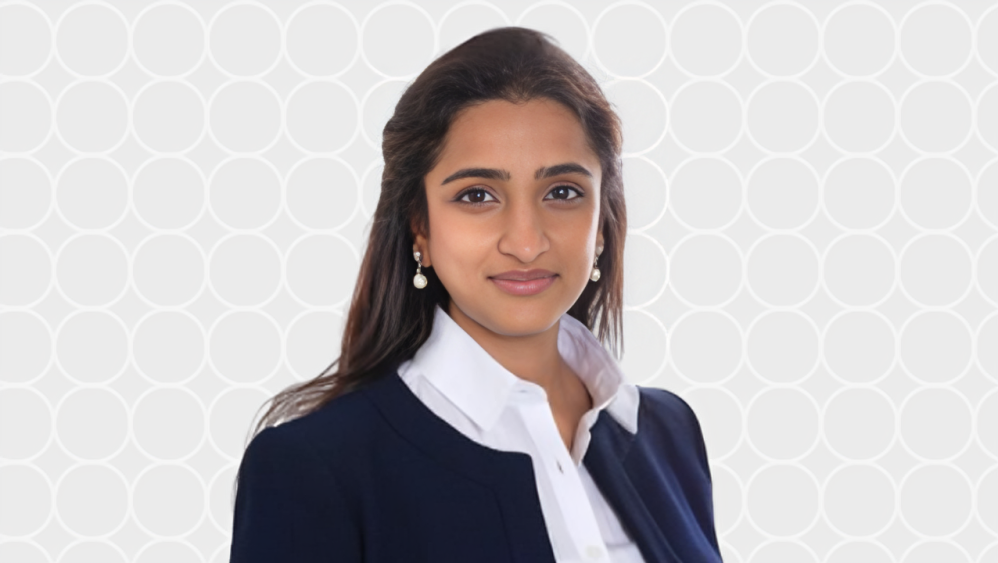
Miss Sinha is a Oral & Maxillofacial Surgery Specialist


Areas of expertise
- Cancer screening
- Oral cancer
- Sarcoma
- Pre-cancerous lesions
- Salivary gland cancers


Make an appointment
Address
-
Devonshire Diagnostic Centre
16 Devonshire St, Marylebone, London, W1G 7AF


-
The Harley Street Clinic
35 Weymouth Street, London, W1G 8BJ
About Miss Deepti Sinha
GMC number: 7278610
Year qualified: 2012
Place of primary qualification: University of London
Initial consultation fee: £300
Follow up consultation fee: £175
Miss Deepti Sinha is a Central London based oral and maxillofacial surgeon specialising in the diagnosis and surgical treatment of conditions affecting the mouth, jaw, face and neck. She practises at leading private clinics in London and has particular expertise in head and neck cancer diagnosis, tumour surgery and reconstructive surgery following cancer treatment or trauma. As a female oral and maxillofacial surgeon in Central London, she offers personalised care and can arrange a female-led care team where requested.
Miss Sinha originally trained in dentistry, gaining her Bachelor of Dental Surgery before obtaining membership of the Faculty of Dental Surgery at the Royal College of Surgeons of Edinburgh. She later completed her medical degree at Guy’s, King’s and St Thomas’ Hospitals in London and went on to undertake specialist training in oral and maxillofacial surgery, developing advanced expertise in oral, facial and jaw surgery, head and neck oncology and reconstructive techniques.
Her clinical practice includes the management of head and neck cancers, complex facial tumours and reconstructive surgery, as well as a wide range of oral and maxillofacial conditions. She treats both adult and paediatric patients and is particularly experienced in managing complex, redo and difficult surgical cases requiring specialist expertise.
Miss Sinha provides a one-stop, same-day diagnostic service where possible. Investigations such as ultrasound, biopsy, MRI and CT scans can be coordinated rapidly, allowing many patients to receive a diagnosis and management plan on the same day or within a week. This streamlined pathway is particularly valuable for patients with suspected cancer cases who require prompt assessment and treatment planning.
Areas of expertise
- Assessment for acquired head & skull deformity
- Basal cell carcinoma
- Benign (non-cancerous) skin conditions
- Bone graft
- Broken nose
- Broken teeth/retained root removal
- Cancer of the head, neck, mouth, and tongue
- Cancer reconstructive surgery
- Cancer screening
- Complex teeth cases
- Cyst removal
- Cysts
- Dental implants
- Dentoalveolar surgery
- Dermoid cysts
- Diagnosis and management of a full range of diseases of the mouth, jaw, face and neck
- Enlarged lymph nodes
- Excision of lesion of lip
- Excision of lesions of the mouth, tongue, and gum
- Excision of lymph nodes
- Extracapsular dissection of benign parotid tumours (minimally invasive)
- Facial nerve repair
- Facial reanimation
- Facial reconstruction
- Facial rejuvenation
- Facial surgery
- Facial trauma
- Facial trauma and reconstruction
- Functional Botox treatment for facial palsy
- Functional Botox treatment for masseteric hypertrophy
- Functional Botox treatment for temporomandibular joint problems
- Gland washout
- Head & neck cancers
- Head & neck surgery
- Head & neck tumours
- Head and neck cancer surgery
- Impacted canine removal
- Impacted/infected wisdom teeth removal
- Lesion biopsy
- Lip lesion
- Lipoma removal
- Lymph node biopsy
- Management of jaw cyst
- Microvascular free flap surgery
- Minor skin surgery
- Mole removal
- Mouth sore treatment
- Mouth ulcer treatment
- Mucocele removal
- Neck lumps
- Nerve graft
- Nerve reanimation
- Oral cancer
- Oral lichen planus
- Oral reconstruction
- Paediatric oral/maxillofacial cancer care
- Parotid gland stone removal
- Parotid tumour
- Pre-cancerous lesions
- Ranula treatment
- Reconstructive surgery
- Restricted mouth opening and locking
- Salivary gland cancer
- Salivary gland cancers
- Salivary gland disorders
- Salivary gland stone removal
- Salivary gland surgery
- Sarcoma
- Scar revision surgery
- Scar treatment
- Secondary reconstruction
- Skin biopsy
- Skin cancer
- Skin cancer surgery
- Skin cancer treatment
- Skin grafts
- Skin lesion removal (warts, moles and skin tags)
- Squamous cell carcinoma (SCC)
- Stem cell therapy
- Submandibular gland stone removal
- Submandibular gland tumour surgery
- Surgical and non-surgical management of facial palsy
- Temporomandibular jaw joint pain and clicking
- Temporomandibular joint (TMJ) problems
- Thyroid cancer
- Thyroidectomy
- TMJ disorders
- TMJ surgery
- Tongue cancer
- Tooth extraction
- Uncovering canines
- Wisdom teeth removal
Frequently asked questions
Why did you decide to become a Oral & Maxillofacial Surgery Specialist ?
I did dentistry to begin with. I passed dentistry with honours and had four different groups in which I had top marks at the university. And I sat there very deeply unhappy, thinking that this is it and this is what Im going to be doing. I did an elective at GKT, Guys Kings and St Thomas's. Somebody mentioned to me, I was getting bored just looking at the dentistry there. And then somebody said, why don't you go downstairs to theatre? Somebody's doing a cancer operation. So I'd never seen one. I just went downstairs to see a cancer operation. And I was just blown away by what they could do, which is remove cancer at the same time and reconstruct it. And then patch up the patient and it looked like nothing had happened. And then I went back home and said, this is what I want to do.
I got into private practice not because I wanted to, and it was actually because somebody wrote to me on my NHS email, asked if I treat a rare type of cancer called sarcoma surgically. Someone from Egypt wanting treatment. Of course, they're not entitled to treat on the NHS. So I had to then ask a colleague if they would be willing to take on the case. And that actually made me feel that medicine should be available to everybody, whether you have money or you don't. So that's the reason I got into private practice.
What are the common symptoms that your patients tend to present with?
Common things are ulcers in the mouth, ear pain, patches, white patches or red patches, lumps and bumps, odd symptoms that no one has a clue or answer to, or sometimes they've had treatment elsewhere. This is another thing about my practice, I get a lot of redo cases. They've been treated elsewhere and it's incomplete or the clinician didn't know, and they come back to then have formal treatment with me.
In terms of emergencies, I can see patients who have got swellings, fever, can't open their mouth, can't talk, dental abscesses. But majority of it is related to lumps, bumps, ulcers in the mouth, coloured lesions in the mouth.
What are the treatments that you're able to offer your patients?
Diagnostics include ultrasound, CT scans, cone beam scans, OPGs, MRI scans, PET CTs. Also fine needle aspirations, core biopsies, open biopsies, biopsies under general anaesthetic. They can have virtually any investigation they need, including things like whole genome sequencing and next generation sequencing because of cancer diagnosis.
Treatment options are mainly surgery and reconstruction. It really depends upon the type of surgery you need and what needs to be reconstructed. If you have a tumour in the top jaw, surgery is about removing the top jaw, but then reconstruction options are on the same day. There will be facilities for using your own tissue from another part of your body. I have a dentist that works in the group and then we can also do all the rehabilitation so that functionally the patient is able to go back to normal life.
For me, success is not how many years a patient has survived because that's sometimes not in our hands. What is important to me is how can somebody go back to their normal life? Because I treat a lot of young people, for me it's a big marker of can these people go back to their job, can they speak well, can they eat well, can they go out for a meal with their friends without being afraid or ashamed. A lot of surgery that I do involves swallowing and speaking. Can these people get married? The people that are 10 and 12 years old that I treat, can they go back and have the same opportunities?
When you have an operation in your belly, your clothes hide it. When you have an operation in your face, nothing hides it. Some of the techniques developed over the last couple of years, where I place my incisions or how I access them is all so that they are more lateral in the face, not in the centre, not visible.
There are no two operations that are the same. It's all tailored to the patient. I do work with a team of people: speech and language therapists, dietetics, physiotherapists, psychologist, a CNS, somebody from oral medicine, an oncologist, a proton beam specialist, and somebody that does trials.
What are your areas of sub-specialist interest?
My sub-specialist interests are essentially around cancer mainly, cancer reconstructive surgery. And also a lot of secondary reconstructions, because cancer is just an episode nowadays. People live longer than we expect them to, which is good, but then they have the side effects of the treatment they've had, most of it radiotherapy based.
I treat both adult and paediatric population. That's a big thing, being able to treat both.
Salivary gland and then also things like nerve reanimation.
Professional memberships