Mr Nikolaos Chatzizacharias, Consultant Hepato-Pancreato-Biliary and Liver Transplant Surgeon

Mr Nikolaos Chatzizacharias
Consultant Hepato-Pancreato-Biliary and Liver Transplant Surgeon
 Instant booking
Mr Nikolaos Chatzizacharias MD PhD FRCS FACS
Consultant Hepato-Pancreato-Biliary and Liver Transplant Surgeon
Mr Nikolaos Chatzizacharias
Consultant Hepato-Pancreato-Biliary and Liver Transplant Surgeon MD PhD FRCS FACS
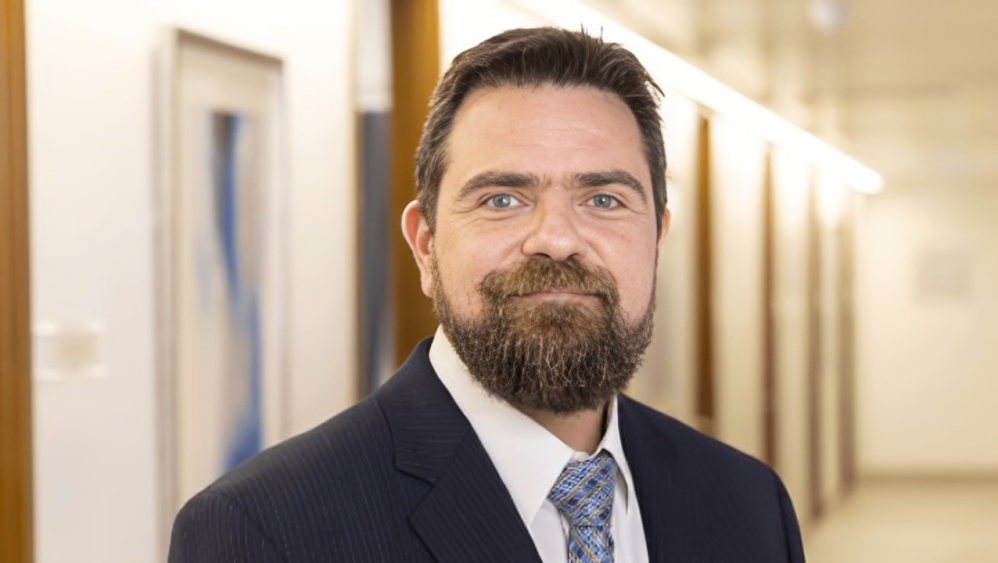
Mr Chatzizacharias is a recommended Consultant Hepato-Pancreato-Biliary and Liver Transplant Surgeon


Areas of expertise
- Pancreatic cancer
- Cholangiocarcinoma (bile duct cancer)
- Liver cancer
- Liver disease
- Gallbladder surgery


Recommendations for Mr Chatzizacharias
These recommendations are for information purposes only. Doctors providing recommendations do so in good faith and are not responsible for clinical outcomes.


Recommended by:


byDr Palak Jitendrakumar Trivedi, Consultant Gastroenterologist
❝Mr. Chatzizacharias is a great surgeon, with extensive experience in delivering liver, pancreatic and bile duct / gallbladder surgery. He has expertise in benign and malignant bile duct conditions, and endeavours to deliver personailsed treatment that always keeps patients at the centre of care.❞
byDr Homoyoon Mehrzad, Consultant Interventional Radiologist
❝I have been working closely with Nikolaos for some time. I have always been impressed by his professionalism and due diligence on treating his patients with the latest evidence based methods and with compassion. I think he is a leader in his field and would recommend him to others.❞
by Dr Peter Labib, General Surgeon
❝Mr Chatzizacharias is an extremely accomplished surgeon with many years of experience in high volume centres. He is well versed in complex pancreatic, liver and gallbladder resections for benign and malignant conditions. I would certainly recommend his expertise.❞

byDr James Good, Consultant Oncologist
❝Nick is a committed and approachable surgeon who works closely as part of our multi-disciplinary team to achieve the best possible outcomes for patients❞
byDr Palak Jitendrakumar Trivedi, Consultant Gastroenterologist
❝Mr. Chatzizacharias is a great surgeon, with extensive experience in delivering liver, pancreatic and bile duct / gallbladder surgery. He has expertise in benign and malignant bile duct conditions, and endeavours to deliver personailsed treatment that always keeps patients at the centre of care.❞
byDr Homoyoon Mehrzad, Consultant Interventional Radiologist
❝I have been working closely with Nikolaos for some time. I have always been impressed by his professionalism and due diligence on treating his patients with the latest evidence based methods and with compassion. I think he is a leader in his field and would recommend him to others.❞
byDr James Good, Consultant Oncologist
❝Nick is a committed and approachable surgeon who works closely as part of our multi-disciplinary team to achieve the best possible outcomes for patients❞
by Dr Peter Labib, General Surgeon
❝Mr Chatzizacharias is an extremely accomplished surgeon with many years of experience in high volume centres. He is well versed in complex pancreatic, liver and gallbladder resections for benign and malignant conditions. I would certainly recommend his expertise.❞
Make an appointment
Address
-
The Harborne Hospital, part of HCA Healthcare UK
Mindelsohn Way, Birmingham, B15 2TQ


About Mr Nikolaos Chatzizacharias
GMC number: 6165632
Year qualified: 2004
Place of primary qualification: National Capodistrian University of Athens
Initial consultation fee: £300
Follow up consultation fee: £200
Mr Nikolaos Chatzizacharias is a highly skilled consultant specialising in general surgery and hepatopancreatobiliary (HPB) surgery. Based at the Queen Elizabeth Hospital Birmingham, he has been delivering exceptional patient care since his appointment as a consultant in 2017. Mr Chatzizacharias is recognised for his expertise in managing complex conditions related to the liver, pancreas, and biliary systems.
He is adept in performing a wide range of surgical procedures, including liver resections, pancreatic surgery, and minimally invasive techniques. His areas of focus include treating conditions such as liver tumours, pancreatic cancer, bile duct disorders, and gallstone disease. With a patient-centred approach, he is dedicated to achieving the best outcomes through tailored treatment plans and advanced surgical methods.
Beyond his clinical practice, Mr Chatzizacharias holds an active role in mentoring junior doctors and contributes to research in hepatopancreatobiliary surgery. His work in this field has been widely acknowledged, reflecting his commitment to advancing surgical techniques and improving patient care.
Mr Chatzizacharias has a keen interest in integrating new technologies into surgical practice, such as robotic-assisted surgery, which enhances precision and reduces recovery times for patients. His dedication to innovation ensures that his patients benefit from cutting-edge treatments and compassionate care.
A firm advocate for medical education and research, Mr Chatzizacharias frequently participates in conferences and workshops, sharing his knowledge with peers and staying updated on the latest advancements in his field. His expertise and passion for surgery make him a trusted specialist for patients seeking effective treatment for complex HPB conditions.
Teaching posts
• Honorary Associate Clinical Professor, College of Medical and Dental Sciences, University of Birmingham (present)
• Educational Supervisor in the MSci intercalated programme, University of Birmingham Medical School (present)
• Clinical Instructor in Surgical Oncology, Medical College of Wisconsin (2016 - 2017)
Areas of expertise
- Abdominal pain
- Appendicitis
- Cancer
- Cholangiocarcinoma (bile duct cancer)
- Cholecystectomy
- Cholelithiasis (gallstones)
- Cirrhosis
- Epigastric hernia
- Gallbladder surgery
- Gallstones
- Hernia
- Incisional hernia
- Inguinal hernia
- Jaundice
- Liver
- Liver cancer
- Liver cyst
- Liver disease
- Liver function tests
- Liver surgery
- Liver transplant
- Lymph nodes
- Lymphadenectomy
- Metastasis
- Minimal access surgery (keyhole surgery)
- Neuroendocrine tumours
- Pancreas surgery
- Pancreatic cancer
- Pancreatic cyst
- Pancreatitis
- Radiofrequency ablation (RFA)
- Radiofrequency treatment (RFA)
- Robotic surgery
- Spleen removal
- Umbilical hernia
Frequently asked questions
Why did you decide to become a Consultant Hepato-Pancreato-Biliary and Liver Transplant Surgeon ?
When I was still at medical school, I saw myself becoming a surgeon and nothing else, so I focused on a surgical career. As my surgical training progressed, I became more fascinated by oncology and wanted to help patients with cancer. I did basic science research on the signalling pathways in pancreatic cancer cells, which introduced me properly to pancreatic cancer and its biology. That was about 20 years ago, and it is only in the last year that new drugs targeting those pathways have started to come out.
That interest brought me closer to hepatobiliary surgery. During surgical training you do rotations, and in my hepatobiliary and transplant rotations I saw that this is a very challenging area of the body to operate on. It involves major blood vessels, so you need oncological skills and thinking, and you also need to be comfortable doing vascular work. HPB and transplant surgery combine both, and their skills are transferable.
I finished my training in the UK in HPB and transplant surgery, did a fellowship in complex HPB surgery in the US, and then came back to the UK to become a consultant in Birmingham. It was a process rather than one single thing that guided me to the subspecialty. What made me want to do this is the complexity of the surgery, the skill and attention to detail it demands, and the focus needed to take patients through their whole journey, from removing the cancer to providing the surgical part of the multidisciplinary care these patients require.
What are the common symptoms that your patients tend to present with?
It depends on the condition. For a simple benign condition such as gallstones, the common symptoms are pain after eating in the right upper abdomen, which can radiate to the back and the right shoulder. Many patients self-diagnose, then see their GP, who runs the appropriate tests, identifies the stones and refers them to a specialist. Benign conditions of the pancreas or liver can present with a variety of symptoms, or with deranged liver function tests or other abnormal blood tests.
A lot of my patients have cancer, and in most cases they arrive already diagnosed. They typically first present with jaundice (turning yellow), unintentional weight loss, loss of appetite, pain in the abdomen that can go through to the back, or newly diagnosed diabetes, or an unexplained rise in insulin requirements in someone who already has diabetes. These are the most common presenting symptoms.
What are the treatments that you're able to offer your patients?
I aim to provide a full and fast service, supported by a multidisciplinary team (MDT). When I see a patient in clinic and think they need a scan, the HCA team are very good at facilitating that. In most cases the patient can walk to the radiology department and have the scan on the same day, unless it is a specialised scan that needs a specialist radiologist. So patients get the clinic assessment and all the necessary investigations very quickly.
I provide the surgical part of the treatment and collaborate with colleagues who help with the rest. The anaesthetists I work with are specialist cardiac or specialist liver anaesthetists, with a lot of expertise in the anaesthetic care that complex liver and pancreas cases require. HCA also has a very good set-up, including an ICU, so we can offer complex surgery.
Patient care is more than the operation. Collaboration with oncologists, gastroenterologists and hepatologists is essential, and we have a good network we work with. We have a private MDT, so every private patient is discussed before a decision is made, and it does not rest on me or any one person to decide the best treatment. Specialist dietitians also help patients on their journey, before and after treatment. All the radiologists who review my patients' scans are HPB radiologists, not general radiologists, and even when a patient has had a scan elsewhere it is re-reviewed by specialist radiologists and goes through the MDT.
As an example, a patient in his 40s came to me recently with a large splenic cyst that looked entirely benign. He had been recommended surgery on the NHS but wanted it done faster privately. I took him through the same process and the MDT, and the specialist radiologist identified a pancreatic cyst that had been missed in the initial report. It is unlikely to affect his management and is a benign incidental finding, but certain types of pancreatic cyst carry a low lifetime risk of conversion to malignancy, so it still matters. That is the level of care, and the depth of specialist expertise, that the whole team provides, right through to the surgical care.
What are your areas of sub-specialist interest?
My subspecialty interest is complex cancer surgery. Since 2008, at least for pancreatic cancer, surgery has been centralised in HPB cancer services. Until then every hospital could operate on HPB cancer cases, but evidence showed that the more you do, the better you become, as in any technical profession, and the team around you also gets better at looking after patients. That is how centralisation came about.
Even so, specialist centres offer a variety of treatment options, and some are stronger in one area than another. For example, another centre may be better at minimally invasive approaches. My interest is in what we call locally advanced or locally extended cancer, where the tumour involves major vascular structures or other organs. These patients need a very specific, structured and timely approach to reach a good outcome. It should never be a case of doing something and seeing what happens: there has to be a plan, and the plan has to be delivered in a particular way.
My fellowship training was based on this. With training in both HPB and transplant surgery, I have the expertise and skills to perform a lot of vascular resections and reconstructions. When I came back to the UK, I established the programme at the Queen Elizabeth Hospital Birmingham. There is no other programme in the UK to compare it with, and we benchmark ourselves only against huge centres around the world. With HCA coming to Birmingham, I had the opportunity and the facilities to bring this to the private sector. Cases that are deemed inoperable or palliative can still have a chance of longer-term survival if they go down this pathway, either in the NHS in Birmingham or in the private sector if they wish.
Professional memberships





Articles by Mr Nikolaos Chatzizacharias

Factors associated with favourable pathological tumour response after neoadjuvant chemotherapy in patients with pancreatic ductal adenocarcinoma

Investigating misdiagnosis of suspected cancer among patients undergoing pancreatoduodenectomy
Resection of isolated liver oligometastatic disease in pancreatic ductal adenocarcinoma

Vein wall invasion is a more reliable predictor of oncological outcomes than vein-related margins after pancreaticoduodenectomy for early stages of pancreatic ductal adenocarcinoma
Arterial resection during operative management of pancreatic head and uncinate process adenocarcinoma
Staging computed tomography parameters predict the need for vein resection during pancreaticoduodenectomy in resectable pancreatic ductal adenocarcinoma
Can preoperative carbohydrate antigen 19-9 predict metastatic pancreatic cancer? Results of a systematic review and meta-analysis
Pancreatic anastomosis training models
Determination of "borderline resectable" pancreatic cancer - A global assessment of 30 shades of grey
Significance of predicted future liver remnant volume on liver failure risk after major hepatectomy
Management of distal cholangiocarcinoma with arterial involvement: Systematic review and case series on the role of neoadjuvant therapy

Potential clinical utility of intraoperative fluid amylase measurement during pancreaticoduodenectomy
HPB P49 Vein wall invasion is a more reliable predictor of oncological outcomes than vein related surgical margins after pancreaticoduodenectomy for early stages of pancreatic ductal adenocarcinoma
HPB P14 Para-aortic lymph node involvement should not be a contraindication to resection of pancreatic ductal adenocarcinoma
HPB P03 Oncological outcomes are comparable between octogenarians and younger patients after pancreatoduodenectomy for pancreatic ductal adenocarcinoma

HPB P04 The DISSECT trial, ‘The effect of periaDventitIal SMA diSsECTion on margin status during pancreaticoduodenectomy for resectable pancreatic cancer’ results of safety and feasibility pilot study
HPB P16 Impact of frailty on short-term outcomes after laparoscopic and open hepatectomy
Early postoperative risk stratification in patients with pancreatic fistula after pancreaticoduodenectomy
Meta-analysis of interrupted versus continuous suturing for Roux-en-Y hepaticojejunostomy and duct-to-duct choledochocholedochostomy
Impact of frailty on short-term outcomes after laparoscopic and open hepatectomy
Other specialists recommended by Mr Chatzizacharias

Dr Shivan Sivakumar, Consultant Medical Oncologist
❝Dr Sivakumar is an academic oncologist who specialises in the treatment of HPB cancers. He is very up to date and bases his treatment on the absolute latest evidence, which is why I recommend him for that part of the pathway. He is also very active academically and has information and access to many clinical trials.❞
Dr James Good, Consultant Oncologist
❝Dr Good is a clinical oncologist who is very well known for radiotherapy treatment, including MRI-guided radiotherapy. Any patient who needs radiotherapy before or after surgery, I referred to him. Dr Good also treats a variety of other tumours in addition to liver and pancreatic cancers.❞

Dr Victoria Kunene, Consultant Medical Oncologist
❝Dr Kunene is an oncologist I work with closely, mainly for colorectal liver metastases. She is part of the Harborne MDT and treats patients based on the latest clinical evidence. In addition to liver metastases, she also treats a variety of other tumours. ❞
Dr Palak Jitendrakumar Trivedi, Consultant Gastroenterologist
❝Prof. Trivedi is a very knowledgeable and caring hepatologist, highly experienced in complex liver problems, from early signs and management of liver dysfunction to advanced cirrhosis and liver transplantation. ❞


