Prof. Prabhakar Rajan, Consultant Urological & Robotic Surgeon
Prof. Prabhakar Rajan
Consultant Urological & Robotic Surgeon
 Instant booking
Prof. Prabhakar Rajan MBBChir MA (Cantab) PhD FRCS(Urol) FHEA
Consultant Urological & Robotic Surgeon
Prof. Prabhakar Rajan
Consultant Urological & Robotic Surgeon MBBChir MA (Cantab) PhD FRCS(Urol) FHEA
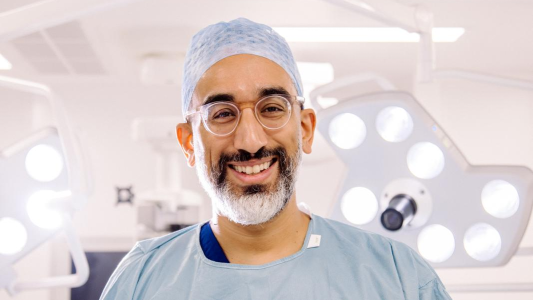
Prof. Rajan is a Consultant Urological & Robotic Surgeon


Areas of expertise
- Prostate cancer risk assessment
- Prostate biopsy (MRI-guided)
- Robotic radical prostatectomy
- Lower urinary tract symptoms
- Testicular cancer


Make an appointment
Address
-
HCA UK Canary Wharf
St Thomas Street, London, SE1 9BS


-
HCA UK City of London - 120 Old Broad Street
120 Old Broad Street, London, EC2N 1HT
About Prof. Prabhakar Rajan
Professor Prabhakar Rajan is a leading urologist specialising in prostate cancer diagnostics, robotic surgery, and testicular cancer. He graduated from the University of Cambridge, completed surgical and urology training in Scotland, and undertook a fellowship in robotic surgery at the Karolinska Institutet and University Hospital in Stockholm, Sweden. Since 2015, he has been based at St Bartholomew’s Hospital (Barts Health NHS Trust) and University College London NHS Foundation Trust, where he leads the Uro-oncology service.
Prof. Rajan holds a PhD in prostate cancer from Newcastle University and completed post-doctoral research at the University of Glasgow and the CR-UK Beatson Institute. In 2012, he became the first urologist in Scotland to receive the Royal College of Surgeons of England/CR-UK Clinician Scientist Fellowship in Surgery. He now leads an internationally recognised cancer research group at the Barts Cancer Institute, Queen Mary University of London, and runs clinical trials exploring new treatments for prostate and testicular cancers.
He is a Fellow of the Royal College of Surgeons of England, the Higher Education Academy, and the Alan Turing Institute, and serves on national professional bodies for uro-oncology.
Outside of work, Prof. Rajan enjoys cycling, running, and travelling to remote destinations where he practises his Tamil—and occasionally Hindi and Spanish.
Areas of expertise
- Benign prostate hyperplasia
- Bladder cancer
- Bladder neck incision
- Blood in urine (haematuria)
- Circumcision
- Cystoscopy
- Day case procedures
- Epididymal cysts
- Foreskin and scrotal conditions
- Frenuloplasty (penis)
- Germ cell testicular cancer
- Hydrocelectomy
- Hydrocoele (collection of fluid around the testicle)
- MRI of prostate
- Nerve sparing prostatectomy
- Overactive bladder
- Prostate biopsy (MRI-guided)
- Prostate cancer risk assessment
- Prostate cancer diagnostics
- Prostatectomy (radical)
- Prostatectomy (robotic)
- Prostatectomy (turp)
- Prostatitis (prostate swelling)
- PSA testing
- Retroperitoneal procedures
- Retzius-sparing radical prostatectomy
- Robotic surgery
- Testicular cancer
- Testicular lumps & swellings
- Testicular pain
- Transrectal ultrasound (TRUS)
- Transurethral resection of a bladder tumour (TURBT)
- Undescended testicle
- Urethral and bladder neck sparing in prostatectomy
- Urinary retention
- Urinary tract infections (UTIs)
- Urological cancers
- Varicocele
Professional memberships




Articles by Prof. Prabhakar Rajan

Prostate cancer theragnostics biomarkers: An update
Emerging tools for the early detection of prostate cancer
Interventions for patients with prostate cancer on active surveillance: a narrative review
Systematic Review and Meta-Analysis of the Management of Relapsed Germ Cell Tumours Following Cisplatin-Based Chemotherapy
Facile synthesis of elastin nanogels encapsulated decursin for castrated resistance prostate cancer therapy
Sociodemographic landscape of suspected prostate cancer referrals and diagnoses across North East London
Therapy de-escalation for testicular cancer (THERATEST)



