Mr Mark Harris, Consultant Orthopaedic and Spinal Surgeon
Mr Mark Harris
Consultant Orthopaedic and Spinal Surgeon
 Instant booking
Mr Mark Harris BSc. Medical Science. MB ChB. FRCS (Tr&Orth)
Consultant Orthopaedic and Spinal Surgeon
Mr Mark Harris
Consultant Orthopaedic and Spinal Surgeon BSc. Medical Science. MB ChB. FRCS (Tr&Orth)
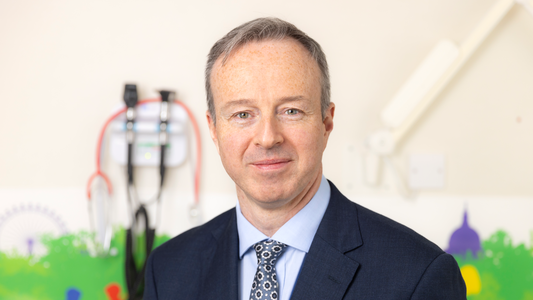
Mr Harris is a recommended Consultant Orthopaedic and Spinal Surgeon
Patient testimonials | Hattie’s Scoliosis


Areas of expertise
- Scoliosis surgery
- Spinal deformity
- Kyphosis
- Back pain
- Spondylolisthesis & spondylosis


Recommendations for Mr Harris
These recommendations are for information purposes only. Doctors providing recommendations do so in good faith and are not responsible for clinical outcomes.


Recommended by:

.png?231401404)
byMr Jonathan Wright, Consultant Paediatric Orthopaedic and Limb Reconstruction Surgeon
❝Mr Harris has become the colleague to whom I send many of my patients who require a spinal opinion. A trusted colleague for difficult spinal cases.❞
.png?231401406)
byMr Jonathan Wright, Consultant Paediatric Orthopaedic and Limb Reconstruction Surgeon
❝Mr Harris has become the colleague to whom I send many of my patients who require a spinal opinion. A trusted colleague for difficult spinal cases.❞
Make an appointment
Address
-
The Portland Hospital (Children only)
205 - 209 Great Portland Street, London, W1W 5AH


-
The Portland Scoliosis and Spinal Surgery Centre
215 Great Portland Street, London, W1W 5PN
-
Telephone or video consultation
Virtual
About Mr Mark Harris
Mr Mark Harris is a distinguished Spinal Surgeon specialising in the management of spinal conditions in children and young people. He serves as a consultant at Great Ormond Street Hospital for Sick Children, Guy's and St Thomas' Hospital, and the Evelina Children's Hospital. These internationally renowned institutions are known for their comprehensive range of children's services and receive tertiary referrals from across the globe. Mr Harris is adept at handling the most complex spinal and medical problems, performing over 120 deformity correction operations annually, which underscores his extensive experience in this field.
Mr Harris graduated with a BSc in Medical Science from the University of St Andrews and completed his medical training (MB ChB) at the University of Manchester in 2003. His surgical training took place in London, where he held positions at several prestigious university teaching hospitals, including Chelsea and Westminster, Royal National Orthopaedic, Royal Free, Royal London, St George's, and Guy's and St Thomas' Hospitals. He trained on the South West Thames Trauma and Orthopaedic rotation and became a fellow of the Royal College of Surgeons. Further honing his expertise, he completed two years of subspecialist spinal surgical fellowships at St George's University Hospital and Great Ormond Street Hospital for Sick Children.
In addition to his clinical duties, Mr Harris is the transformation lead for the Evelina Children's Hospital spinal service. He has successfully introduced a spinal pathway for children with spinal problems and complex medical needs. This pathway includes a 'one-stop' preoperative assessment day with a comprehensive multidisciplinary team review, setting the gold standard in the care of children's spinal deformity.
Mr Harris is also dedicated to the education and training of future spinal surgeons. He serves as an educational supervisor to his fellows at Great Ormond Street and is frequently invited to teach on spinal surgery courses, particularly in the area of children's spinal deformity.
In his private practice, Mr Harris focuses exclusively on children's spinal conditions and is a consultant for The Portland Scoliosis and Spinal Surgery Centre. His commitment to providing exceptional care and his extensive experience make him a leading figure in the field of paediatric spinal surgery.
Areas of expertise
- Arthritis (spine)
- Back pain
- Cervical (neck) surgery
- Coccyx fracture
- Complex revision spinal surgery
- Complex spinal disorders
- Degenerative disc disease
- Discectomy
- Epidural
- Facet joint injection
- Laminectomy
- Lower back pain
- Lumbar back surgery
- Minimally invasive spinal surgery
- Nerve root injection
- Osteoporotic fractures
- Paediatric spinal surgery
- Postoperative rehabilitation
- Revision surgery
- Sciatica
- Sciatica surgery
- Scoliosis
- Scoliosis surgery
- Spinal decompression
- Spinal deformity
- Spinal deformity correction
- Spinal fusion
- Spinal pain
- Spinal stenosis
- Spinal surgery
- Spine fracture surgery
- Spine fractures and trauma
- Spine tumours and infections
- Spondylolisthesis & spondylosis
- Sports injuries
- Sports-related spine injuries
- Thoracic (back) surgery
- Trauma surgery
- Upper back pain
- Vertebral compression fracture
Frequently asked questions
Why did you decide to become a Consultant Orthopaedic and Spinal Surgeon ?
I trained as a general orthopaedic surgeon, and during my training I was exposed to all areas of bones and joints. I was particularly taken with spinal surgery because it's exceptionally rewarding to be able to take a problem such as a spinal deformity and, with surgical skills, correct it such that the problem goes away for the patient. It's very rewarding in terms of how good the outcomes are and how satisfied the patients are. The spine is also a core part of you. It's not on the periphery like a hand or a wrist. It involves all systems: heart, lungs, all the organs in the abdomen. It's the core from which everything else is built. It holds you up, so it's very important, and it's challenging, technically very difficult. I was attracted to all of those things, but mainly it's the satisfaction of being able to make people so much better. There's a particular contrast with adult spine surgery, where it's much harder to make patients better. In children, there's a great feeling from being able to help them out, make them better, and give them a different life to what they would have had. That's what attracted me to it.
What are the common symptoms that your patients tend to present with?
Scoliosis and spinal deformity often don't come with any symptoms. Usually patients are fit and healthy, and most often they come in with some asymmetry around the spine, which is noticed in the summer, either by a dance teacher, a physiotherapist or a sports coach, or when they're on holiday on the beach and a parent notices. It doesn't normally come with any symptoms, and quite often the children don't know they've got a problem until it's pointed out. It can occasionally come with a bit of back pain and aching. Conditions such as back pain come primarily with back pain. Rarer conditions can come with multi-system problems, so if it's associated with other conditions like cerebral palsy or problems with the spinal cord, they can come with neurological symptoms or problems with the legs. In the main, presentations are relatively asymptomatic apart from a bit of backache, which is why it's important that patients are seen and assessed. Often, in the absence of any symptoms, families don't seek any help until there's a really significant deformity, and then it's perhaps too late to do something other than operate.
What are the treatments that you're able to offer your patients?
On the diagnostic side, it's very important when assessing spinal deformity to get a clear picture of what's going on, and that requires a combination of X-rays, MRI scans and occasionally CT scans, used judiciously with the right equipment to get good pictures with the lowest dose of radiation. We're very fortunate to have an EOS scanner, a very low-dose X-ray machine, and up to date MRI scanners for looking at the spine in great detail. On the treatment side, we try to avoid surgery as much as possible, and that often involves core physiotherapy and the use of bracing whilst children are growing. Sometimes those treatments are not enough, and then we do need to be able to intervene with surgery, which is very effective at straightening the spine and preventing it from getting worse. So we offer the full range, from conservative and non-operative treatments through to operative treatments to deal with spinal problems.
What are your areas of sub-specialist interest?
I work in the NHS at Great Ormond Street, which deals with some of the most complex problems you can imagine, not just of the bones of the spine, but also of the child as a whole in terms of other medical problems they have. So my specialist area is complex paediatric spinal surgery: the kinds of surgeries that can't be done elsewhere in other hospitals, but that need to come to national centres, not just because of the spinal problem, but because of all the other issues these children have in terms of their heart, their lungs and their brain.
Professional memberships