Mr Shelain Patel, Consultant Orthopaedic Foot & Ankle Surgeon
Mr Shelain Patel
Consultant Orthopaedic Foot & Ankle Surgeon
 Instant booking
Mr Shelain Patel BSc DipSEM MBBS MRCS FRCS (Tr & Orth)
Consultant Orthopaedic Foot & Ankle Surgeon
Mr Shelain Patel
Consultant Orthopaedic Foot & Ankle Surgeon BSc DipSEM MBBS MRCS FRCS (Tr & Orth)
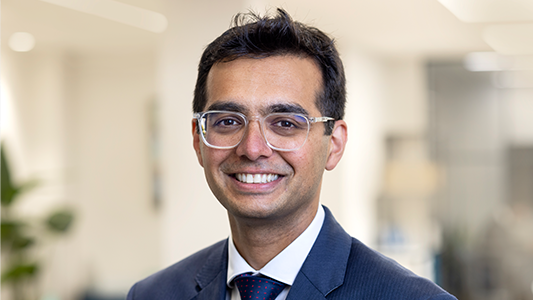
Mr Patel is a recommended Consultant Orthopaedic Foot & Ankle Surgeon


Areas of expertise
- Ankle arthroscopy
- Ankle sprains and ligament reconstruction
- Ankle replacements
- Bunionectomy
- Plantar fasciitis and fibromas


Recommendations for Mr Patel
These recommendations are for information purposes only. Doctors providing recommendations do so in good faith and are not responsible for clinical outcomes.


Recommended by:

.png?162026369)
byMr Jonathan Wright, Consultant Paediatric Orthopaedic and Limb Reconstruction Surgeon
❝An excellent colleague from the Royal National Orthopaedic Hospital. He is at the forefront of foot and ankle surgery and does a lot of work teaching future foot and ankle surgeons through the course he convenes. ❞
.png?162026371)
byMr Jonathan Wright, Consultant Paediatric Orthopaedic and Limb Reconstruction Surgeon
❝An excellent colleague from the Royal National Orthopaedic Hospital. He is at the forefront of foot and ankle surgery and does a lot of work teaching future foot and ankle surgeons through the course he convenes. ❞
Make an appointment
Address
-
The Princess Grace Hospital Outpatients
30 Devonshire Street, London, W1G 7AF


-
Elstree Waterfront Outpatients Centre
The Waterfront Beaufort House Elstree Road, Elstree, London, WD6 3BS
-
The Princess Grace Hospital
42-52 Nottingham Place, London, W1U 5NY
About Mr Shelain Patel
GMC number: 6077304
Year qualified: 2003
Place of primary qualification: University of London
Initial consultation fee: £350
Follow up consultation fee: £225
Mr Shelain Patel is a highly qualified and experienced orthopaedic foot and ankle surgeon with a special interest in various foot and ankle conditions. He earned his medical qualification from the University College London Medical School and completed his basic surgical training in London. Mr Patel also became a clinical research fellow at University College Hospital and later began his orthopaedic training on the UCLH and Middlesex Hospital program.
Mr Patel completed renowned foot and ankle fellowships in Windsor and the Royal National Orthopaedic Hospital. He was awarded the BOSTAA fellowship to visit centres of excellence in the United States and Holland. Additionally, BOFAS sponsored him to participate in the BOA Clinical Leaders Program.
Mr Patel has authored numerous publications in journals and books. He is currently researching novel assessment and treatment methods for foot and ankle conditions at the Institute of Orthopaedics and Musculoskeletal Science based at RNOH.
Outside of work, Mr Patel enjoys trying new cuisines and visiting restaurants. He is a sports fan, playing five-a-side football and following Arsenal Football Club. Engaging in sports and trying new cuisines are great ways for him to unwind and relieve stress.
Areas of expertise
- Achilles tendon problems
- Achilles tendon reconstruction
- Ankle arthroscopy
- Ankle fractures
- Ankle joint fusion
- Ankle replacements
- Ankle sprains and ligament reconstruction
- Ankle tendonitis
- Anterior ankle impingement syndrome
- Arthritis (ankle)
- Arthritis (foot)
- Big toe fusion surgery
- Bunion (hallux valgus) correction
- Bunion surgery
- Bunionectomy
- Bunionette deformity correction
- Bunions (hallux valgus)
- Cartiva implant (big toe joint replacement)
- Cheilectomy
- Claw toe correction
- Claw toes
- Excision of mortons neuromas
- Flatfoot correction
- Foot fractures
- Foot pain
- Foot sprains
- Fracture (broken bone)
- Fracture fixation surgery
- Hallux limitus or hallux rigidus
- Hammer toes
- Hammertoe correction
- Heel bumps
- Joint injection
- Mallet toe correction
- Mallet toes
- Morton's neuroma
- Neuromas
- Osteoarthritis
- Partial nail removal
- Peroneal tendinopathy
- Plantar fasciitis and fibromas
- Sports injuries
- Steroid injection
- Stress fractures
- Tendon repair
- Toe fractures
Frequently asked questions
Why did you decide to become a Consultant Orthopaedic Foot & Ankle Surgeon ?
I chose Foot and Ankle surgery because it is a thinking person‘s specialty. It’s a much more complex area in my eyes compared to other orthopaedic specialties and the impact of one pathology and deformity can have huge implications for another area of the Foot and Ankle. In this sense, it’s important to get it right first time and given that most people stand on their feet, the ability to make patients stand and walk and therefore function better can be hugely rewarding.
I chose to work in private practice to compliment my NHS practice. I think there are areas of private practice which are better which include the speed at which patients are seen, the personalisation of services (in that you get to see the same clinician all the time) and access to faster scans and reduced waiting time for procedures. Private practice helps my NHS practice simply through being busy meaning that I see more patients, recognise more pathology and gain more understanding and experience at managing problems.
What are the common symptoms that your patients tend to present with?
Pain, difficulty walking or standing and potentially deformity are the main symptoms which a patient will present to me with. The exact location and severity of these will vary dependent upon the underlying problem which they have. In that sense there’s a diagnostic conundrum which frequently presents itself because Foot and Ankle is not made up of one or two bones or joints but close to 30 bones, multiple joints and many tendons and ligaments with each one having the potential to go wrong and impact the function of another part of the foot or ankle.
What are the treatments that you're able to offer your patients?
To aid diagnosis, I’m a strong advocate for using a very novel imaging modality known as a standing CT scan. I’ve been using this since 2016 and unlike many imaging modalities, it’s performed with a patient in the standing position. This means it is taken in a functional position and therefore offers much greater information, and importantly, more relevant information than many other types of investigation.
Concerning treatments, I offer everything that is evidence based to work. This includes specialist injections for plantar fibromas and Achilles tendinopathy, all the way up to using patient specific custom-made instrumentation in the use ankle replacement surgery.
What are your areas of sub-specialist interest?
I see a lot of patients with sporting injuries which include ankle sprains, ligament tears and tendon ruptures. I offer a individualised approach for each patient which means deciding on whether conservative treatment (such as bracing, a boot or physiotherapy) or surgery is best. Conversely, I will see patients at the opposite end of the spectrum with long-term problems rather than fresh injuries, and in some cases this will include neuromuscular problems. I have patients who come and see me from all over the world (often for a second or third opinion) with the goal of making them stand and walk better. Many of those patients will have had surgery before which may have failed and they are looking for rescue options.
Professional memberships

Articles by Mr Shelain Patel

Salvage tibiotalocalcaneal arthrodesis augmented with fibular columns and Iliac crest autograft
Intraobserver and interobserver reliability of cone beam weightbearing semi-automatic three-dimensional measurements in symptomatic pes cavovarus
Pes cavovarus in charcot-marie-tooth compared to the idiopathic cavovarus foot
Post-traumatic osteonecrosis of the proximal humerus
Dynamic fixation versus static fixation for distal tibiofibular syndesmosis injuries
Assessing the rotation of the first metatarsal on computed tomography scans
Limb salvage versus below knee amputation for severe adult lower limb deformity
The effect of adherens junction components on keratinocyte adhesion in vitro
Impingement of a fibroma of the extensor tendon sheath on the extensor retinaculum
Congenital clubfoot
Other specialists recommended by Mr Patel
.png?162026390)
Mr Jonathan Wright, Consultant Paediatric Orthopaedic and Limb Reconstruction Surgeon
❝I have worked with Jonathan Wright for over 10 years, and he has exemplified a commitment to Paediatric Orthopaedics throughout this time. He is incredibly knowledgeable, a critical and sensible thinker, empathetic towards patients and their carers, and has a ‘great pair of hands’ which is a surgeon’s way of saying he is a great surgeon who I would trust to operate on me or my family.❞
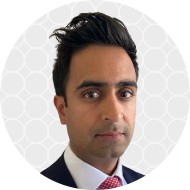
Mr Aditya Prinja, Consultant Orthopaedic Surgeon
❝He has exceptional surgical skills with a dedication to shoulder surgery, knowing when to treat patients conservative and when an operation is the best option.❞
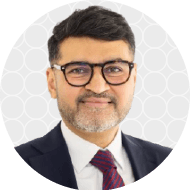
Mr Rohit Shetty, Consultant Spinal surgeon
❝Extremely intelligent and always thinking about the best way to make a difference in patients’ care.❞

Mr Mazin Ibrahim, Consultant Orthopaedic Surgeon (Hip & Knee)
❝Always approachable and has a smile on his face with great feedback from his patients.❞

Mr David Butt, Consultant Shoulder and Elbow Surgeon
❝Assured and measured with great surgical skill.❞
Mr Suroosh Madanipour, Consultant Orthopaedic Surgeon
❝Extremely personable who puts patients at the front and centre of his treatment.❞



