Mr Colin Natali, Consultant Orthopaedic and Spinal Surgeon
Mr Colin Natali

Consultant Orthopaedic and Spinal Surgeon
 Instant booking
Mr Colin Natali MBBS BSc(Hons) FRCS(Eng) FRCS(Orth)
Consultant Orthopaedic and Spinal Surgeon
Mr Colin Natali
Consultant Orthopaedic and Spinal Surgeon MBBS BSc(Hons) FRCS(Eng) FRCS(Orth)
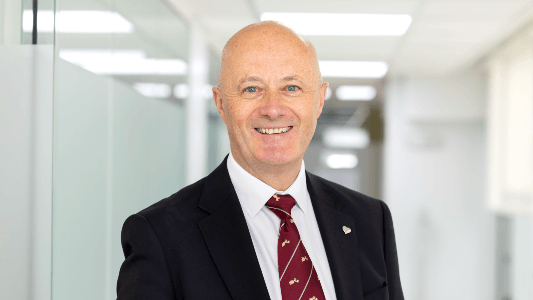
Mr Natali is a recommended Consultant Orthopaedic and Spinal Surgeon


Areas of expertise
- Back pain
- Sciatica
- Neck pain
- Prolapsed disc
- Minimally invasive spinal surgery


Recommendations for Mr Natali
These recommendations are for information purposes only. Doctors providing recommendations do so in good faith and are not responsible for clinical outcomes.






Recommended by:


byMs Claire Small, Physiotherapist
❝Mr Colin Natali is an orthopaedic surgeon dealing in spinal pain. He is someone who doesn't necessarily like to operate unless it's absolutely necessary. He's got a wealth of experience and is very good at communicating effectively with patients about why they do or don't need surgery.❞

byMr Nima Heidari, Consultant Foot, Ankle and Limb Reconstruction Surgeon
❝Trusted colleague and would be happy to refer a member of family to him.❞

byMr Richard Skudder, Osteopath
❝Mr Colin Natali has a very direct bedside manner. I would recommend him.❞

byMr David Goodier, Retired Orthopaedic Surgeon
❝Mr Colin Natali pioneers many new techniques in spinal surgery.❞

byMr Satya Bhattacharya, Consultant General and Hepato-Pancreato-Biliary (HPB) Surgeon
❝Recommended for professional excellence.❞

byMr Rohit Madhav, Consultant Orthopaedic Surgeon & Specialist Foot & Ankle Surgeon
❝Recommended Orthopaedic Surgeon❞

❝Patient centered, offers the most conservative treatment option possible, involves patients in decision making, comprehensive letters back to GPs.❞


byMr Nima Heidari, Consultant Foot, Ankle and Limb Reconstruction Surgeon
❝Trusted colleague and would be happy to refer a member of family to him.❞
byMr David Goodier, Retired Orthopaedic Surgeon
❝Mr Colin Natali pioneers many new techniques in spinal surgery.❞
byMr Satya Bhattacharya, Consultant General and Hepato-Pancreato-Biliary (HPB) Surgeon
❝Recommended for professional excellence.❞
byMr Rohit Madhav, Consultant Orthopaedic Surgeon & Specialist Foot & Ankle Surgeon
❝Recommended Orthopaedic Surgeon❞

by Mr Ragai Gadelrab, Orthopaedic Surgeon
❝A well experienced spinal surgeon in cervical and lumber.❞
byMs Claire Small, Physiotherapist
❝Mr Colin Natali is an orthopaedic surgeon dealing in spinal pain. He is someone who doesn't necessarily like to operate unless it's absolutely necessary. He's got a wealth of experience and is very good at communicating effectively with patients about why they do or don't need surgery.❞
byMr Richard Skudder, Osteopath
❝Mr Colin Natali has a very direct bedside manner. I would recommend him.❞
Make an appointment
Address
-
The Princess Grace Hospital (Alternate weeks: Monday 8am–1pm or 1:30pm–6pm | Weekly: Tuesday 9am–5pm & Wednesday 10:30am–8pm)
42-52 Nottingham Place, London, W1U 5NY


About Mr Colin Natali
GMC number: 3117440
Year qualified: 1986
Place of primary qualification: University of London
Initial consultation fee: £350
Follow up consultation fee: £220
Mr Colin Natali is a highly experienced Consultant Orthopaedic Surgeon, specialising in spinal conditions. He graduated in medicine from the University of London in 1986 and has since dedicated his career to the diagnosis and treatment of spinal disorders. Mr Natali is currently affiliated with the Royal London Hospital, where he served as a Spinal Consultant for 15 years and was the Programme Director for the London Hospital Rotation.
Mr Natali has a particular interest in non-surgical treatment protocols aimed at avoiding surgery whenever possible. However, he is also deeply involved in the development of surgical devices and techniques to optimise surgical outcomes when surgery is necessary. His expertise is focused on the relief of painful spinal conditions, specifically those affecting the neck, thoracic, and lumbar spine.
Throughout his career, Mr Natali has embraced the latest techniques in spine surgery. His areas of interest include back pain, neck pain, prolapsed intervertebral discs, whiplash syndrome, and spondylolisthesis. He is proficient in a wide range of procedures, including conventional open spine surgery, spinal fusion, minimal access surgery, microdiscectomy, endoscopic discectomy, and various forms of interbody fusion such as TLIF and PLIF. He also performs cervical discectomy and X-ray guided injections, including facet joint injections, caudal epidural, rhizotomy, and radiofrequency nerve ablation.
In addition to his clinical work, Mr Natali is committed to medical education. He has previously served as a senior lecturer for undergraduates at Queen Mary Westfield College and continues to train undergraduates, postgraduates, and other medical professionals. He is also the medical director of the Back2Normal rehabilitation clinic, where he oversees the treatment and recovery of patients with spinal conditions.
Mr Natali treats a variety of conditions, including spinal deformity, infections and tumours of the spine, sports injuries to the spine, spinal trauma, and osteoporosis affecting the spine. His comprehensive approach to spinal health ensures that patients receive the most effective and up-to-date care available.
Appointed as a Consultant Orthopaedic Surgeon in 1986, Mr Natali has over three decades of experience in his field. His dedication to improving patient outcomes through both non-surgical and surgical means makes him a leading specialist in spinal health.
Areas of expertise
- Ankylosing spondylitis
- Arthritis (spine)
- Artificial disc replacement
- Back pain
- Cervical (neck) surgery
- Coccyx fracture
- Complex revision spinal surgery
- Complex spinal disorders
- Degenerative disc disease
- Discectomy
- Epidural
- Facet joint replacement
- Herniated disc or slipped disc
- Kyphoplasty
- Kyphosis
- Laminectomy
- Lower back pain
- Lumbar back surgery
- Lumbar decompression surgery
- Lumbar stenosis
- Medial branch nerve blocks
- Microdiscectomy
- Minimally invasive disc surgery (keyhole)
- Minimally invasive spinal surgery
- Neck fracture
- Neck pain
- Nerve block
- Nerve root injection
- PARS defect repair
- Prolapsed disc
- Revision lumbar spine surgery
- Sciatica
- Scoliosis
- Scoliosis surgery
- Spinal cord compression
- Spinal decompression
- Spinal deformity correction
- Spinal disorders
- Spinal fusion
- Spinal pain
- Spinal stenosis
- Spine fracture surgery
- Spine fractures and trauma
- Spondylolisthesis & spondylosis
- Sports-related spine injuries
- Surgery on lower back
- Thoracic (back) surgery
- Upper back pain
- Vertebral compression fracture
Frequently asked questions
Why did you decide to become a Consultant Orthopaedic and Spinal Surgeon ?
At the age of eight, I either wanted to be a lawyer, an aircraft pilot, or a surgeon. Lawyer was ruled out because my writing was appalling and my spelling was terrible. Pilot was out because I wore glasses. So that only left surgery.
When you start as a medical student, you go through every branch of surgery. You do general surgery, where you operate on bowels and abdominal organs. Then I did some spinal surgery, and it just struck me that, as a spine surgeon, you work through every part of the body. You go through the neck from the front and from the back. You go through the thoracic spine through the chest and from the back. You go through the lumbar spine through the abdomen and from the back. It is challenging, varied, and high-stakes, and that combination is what drew me in.
There is also a Winston Churchill quote: there are two types of people in this world, those who have back pain and those who are going to have back pain. As most people have spines, it seemed to me that everyone is going to have a bad back or a bad neck at some point, so it was an ideal field to commit to. What I aim to do differently is to guide patients through the journey from the onset of their pain right through to recovery, whether or not surgery is needed. There are very few things people should stop doing because of back pain. The goal is to get patients back to their sport, their work, and their life. Most people get better. The mindset I want patients to leave with is that this is a success story, not a failure story.
What are the common symptoms that your patients tend to present with?
The patients I see fall into five clear groups:
1. Neck pain alone
2. Neck pain with arm pain (typically from a prolapsed disc in the neck)
3. Thoracic spinal pain (a prolapse here is rare, but the pain itself is common)
4. Low back pain alone
5. Low back pain with sciatica
Most presentations sort cleanly into one of these.
What are the treatments that you're able to offer your patients?
In the NHS, you wait a long time to be seen, a long time for diagnostics, and a long time for treatment. The faster a patient gets to a diagnosis and a treatment plan, the better the outcome. In private practice, that delay disappears.
Almost every patient who sees me will have an MRI scan. Once we know precisely what we are dealing with, we put together a clear treatment plan. As the saying goes: if you fail to plan, you plan to fail. Spinal surgery has no reverse gear, so we rush slowly. Each step is taken thoughtfully, based on information rather than fear.
Patients are encouraged to email questions when they have them. There is nothing worse than sitting at home with a question going round and round in your mind; that is when worry takes over. I have set times in the day to respond, so questions get answered. I work closely with physiotherapists, osteopaths, and chiropractors, and the wider team supports patients through every stage. The whole system is designed to be the kind of care you would want to receive yourself.
What are your areas of sub-specialist interest?
What I love is operating, but you should remember that you are seeing a surgeon who is, in effect, a "choice architect". A useful analogy: if you walk into a Rolls Royce showroom, the salesperson is unlikely to suggest you buy a Mini.
The reality is that there are five treatment options for spinal problems:
1. Do nothing
2. Painkillers
3. Physical therapy
4. Injections
5. Surgery
Around 90% of patients get better with the first three. Once they understand what is wrong with them, and the physiotherapists understand what is wrong with them, they recover. Of the remaining 10%, injections help around two-thirds. The aim throughout is to get patients back to playing sport, walking, running, working, and living their life with as few restrictions as possible.
Professional memberships


Articles by Mr Colin Natali

I'm a spinal doctor - here are the simple daily habits I follow to stay back-pain free

Repair of spondylolysis using compression with a modular link and screws

Spinal osteoblastoma

Unusual imaging findings in association with spinal osteoblastoma
Spinal osteoblastoma: CT and MR imaging with pathological correlation
Osteoid osteoma and osteoblastoma of the spine. Factors associated with the presence of scoliosis

Obesity and recovery from low back pain



